Saturday, August 13, 2011

Image and Poetry: The Work of Julio Molinet


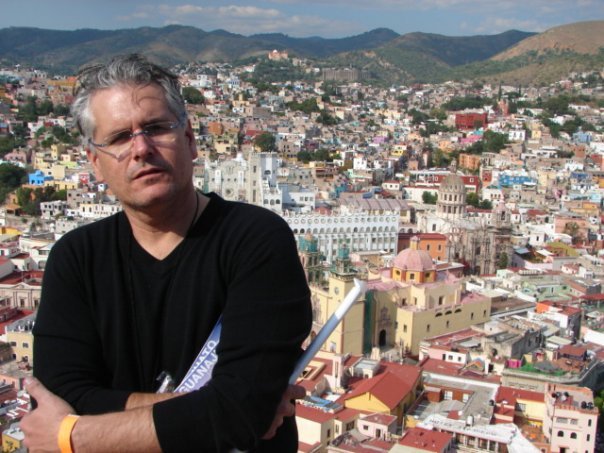
Julio Molinet is an award-winning videographer, poet, journalist, editor, photographer, and radio and television producer, living in El Paso, Texas. A native son of Cuba, Molinet has received numerous awards including, the National Television Festival reporting award in La Habana (2008); the Union of Cuban Writers and Artists award for directing, script-writing, photography and editing (2007); and the national prize for poetry (Cuba). He completed undergraduate and graduate work in communications, journalism, and economics. Julio is a member of the National Association of Hispanic Journalists (NAHJ). It is with great pleasure that we share with our audiences this talented, artist's work on our site.


"My work is influenced by every day life, the seemingless insignificant labors of our day. It is influenced by men and women who go about their chores unnoticed, unrecognized."


 "I am indebted to my teachers--the masters who taught
me that observation, criticism, errors, and even indifference
 are critical processes in the development of an artist."


"I believe every human being is a hero. My work seeks to document
the extraordinary, daily lives of ordinary citizens."


Julio Molinet is currently living in El Paso, Texas. He can be reached at:  uncubanoenmexico@gmail.com  or visit and subcribe to: http://www.youtube.com/user/JagoMolinet 


Sunday, July 31, 2011

Wednesday, July 06, 2011

Women Who Dare to Write Their Stories

The workshop, Women Who Dare to Write Their Stories, sponsored by DEMAC and Cielo Portatil resumes next Wednesday, July 14 at 6:30 SL time. The workshop is held in Spanish and is geared toward women interested in learning the crux of conducting memoir workshops with women with little or no writing experience. The workshop is a 12-week experience of dialog, pedagogic exchanges, literary selections and writing. Participants, geared with microphone and headset, meet once a week at the Smithsonian Latino Virtual Museum every Wednesday for two hours. The workshop is directed by respected, Mexican poet and columnist Dolores Dorantes. There is still time to join this workshop. For more information, contact M. Miranda Maloney at lvmfestival@ymail.com.

Monday, May 09, 2011

Sin Fronteras Cafe Poetry Workshop

The monthly poetry workshop is scheduled for Friday, May 27th at 6 p.m. SL Time. Poet Katherine Hoerth, author of Among the Mariposas, will be presenting the workshop. The workshop is avatar-based and all participants must have a headset with microphone. If you have any questions and would like to RSVP to this event, please email Maria Miranda Maloney at lvmfestival@ymail.com.

Thursday, March 31, 2011

Pondering the Possibilities: A Gaze of Ourselves by Olga Herrera


"We see our identities reflected in what we choose the avatar to be, how to dress, how to interact with others, to act, to run, to walk, to stand, to fly."

LVM has increased the presence and educational relevance of the Smithsonian national holdings engaging the latest technology to provide a wide access to its collections of art, cultural history, anthropology, folklore and traditions, archives and music as well as keeping a record of scholarship and research through videos and databases. As a museum without walls online, LVM formulates a new paradigm accessible to all by the click of a mouse allowing visitors to see, hear and interact in an engaging way. The possibilities for community creation are endless due to the inherit tech structure of virtual worlds and avatars. Ideas of presence, relevance and access that LVM Creative Director Melissa Carrillo mentions below, have been critical to our vision and our work at LVM. Of course, the Smithsonian counts with a growing collection of U.S. Latino related art, artifacts, and archival collections, but there is no dedicated physical space that bring together these collections as they are currently found among the permanent collections of its 19 museums and research centers. LVM provides the unprecedented opportunity to create a presence of Latino collections in one single virtual space. The contextualization of these collections in their historical moments and geographical areas are critical to create community and to explore identity in a museum that follows a model of forum rather than temple of culture. This idea of forum is what you encounter at LVM.

Identity and cultural identity are fluid constructs that are constantly evolving and changing just as technology itself. Periodically we go through processes of transculturation as we are exposed on a daily basis to change in our own environments and habitats by media, by personal interactions, by listening to other perspectives. We take from others, we bring our own and we put the two together into something richer and novel. Or from a global point of view we do the selecting, adapting and reinterpreting of new forms of experiences and we incorporate them into our local everyday life and self. In virtual world environment, avatars allow us to live those experiences and adapt through our gaze our own selves. We see our identities reflected in what we choose the avatar to be, how to dress, how to interact with others, to act, to run, to walk, to stand, to fly. And this forum model creates community and access. LVM educational events and environments become only richer because of the contributions of all by sharing meanings and experiences and adapting them to our own.

Wednesday, March 30, 2011

Part II: A Life in Writing: Margaret Randall

"Throughout my life, I have thought of myself as a bridge: as a bridge between Latin America and North America. As a bridge between socialism and feminism. As a bridge between generations. Sometimes even as a bridge between genres—"


Margaret Randall is the author of over 100 books of poetry, essays, oral history and photography. Her current publications include Something's Wrong With the Cornfields (Skylight Press, 2011), As If the Empty Chair/ Como si la silla vacia (Wings Press, 2011), and First Laugh: Essays from 2000-2009 (University of Nebraska Press, 2011). I spoke to Margaret several weeks ago. What follows is her story, her poetics, and life while living in Mexico, Cuba and Nicaragua.

The first part of Margaret's interview was posted here on March 15, 2011. Please leave a comment.

To contact Margaret Randall, visit her at www.margaretrandall.org.

How does geographic travel play a role in your poetic life?

Geographic travel must play a huge role in my poetic life since it plays such a huge role in my life overall. I am naturally curious about other peoples, other cultures, other landscapes. And I have sought them out, as I have already mentioned. Which has meant that I have written about many other places, hopefully not from a tourist perspective but from the perspective of up-close hands-on experience, even if it has been the experience of an outsider.

Also borders figure prominently in my work. I am fascinated by borders. Arbitrary borders, those constructed by foreign interests of different sorts, infuriate me. Natural borders are generally more malleable, and also very interesting.

Throughout my life, I have thought of myself as a bridge: as a bridge between Latin America and North America. As a bridge between socialism and feminism. As a bridge between generations. Sometimes even as a bridge between genres—I am also a photographer, and love it when my work can straddle different genres, or when I can work with others on multi-genre work. In this sense, then, travel becomes more than only geographical.

You mentioned in your biography that your parents’ support and encouragement profoundly influenced you. Can you tell us more about this?

I was fortunate to have loving parents, who did the best they could. My father, especially, was always extremely supportive of his children’s needs and desires. I grew up in a generation when being an artist wasn’t the most popular middle-class thing. Parents wanted their kids to get viable professions, be able to support themselves—although of course being a girl meant that my parents expected me to marry and that a man would support me. But despite all this, both my parents deeply respected creative expression. So when I early on said I would be a writer, they encourage me and always showed me they were proud of me in this respect.

I was also fortunate in that my parents were quite liberal and open-minded. They were not leftists, but they certainly weren’t rightists, and as they aged they were influenced by my brother’s and my left views. They were not religious, which I think was very helpful. Their veiled anti-Semitism was a problem, and something we often fought about, but in general they were quite open and it was easier for them than it would have been for many other parents of their generation to accept the fact that two of their three children were quite avant garde in their views.

During the years in which I lived in Cuba and Nicaragua, two countries completely out of favor with the U.S. administrations of the times (and still!), my parents visited me in those places. They were curious and interested. As I’ve aged, and now that they are both long gone, I realize how unusual it is to have parents like mine, especially at the time.

Let’s talk about your poetic formation and influences.

Okay. Early on, I would say that I was influenced by the Beats. We were of about the same generation, and Allen Ginsberg’s “Howl” was very important to me when it was first published. It may have been the first poem that spoke powerfully to me. Like many in my generation, poetry had been taught to me by rote and without feeling or connection. My life was not exactly like Ginsberg’s, but the power of his poem resonated with me—mostly, perhaps, because the 1950s were such hypocritical years and that poem is a cry for recognition of the real.

Later I was very much influenced by William Carlos Williams. I was fortunate enough to meet him toward the end of his life, when I lived in New York City and he lived right across the river in New Jersey. I visited, shared my incipient poetry with him, and received is invaluable criticism and encouragement. You’ll notice that to this point I have only mentioned male poets. Women of my generation was often groupies, somebody’s girlfriend or lover or wife. It was a very hard time for women who were serious writers. But feminism came along, and with it many great women’s voices were heard. I am deeply indebted to Adrienne Rich, Sonia Sanchez, Joy Harjo, and many other extraordinary female poets.

In New York, in the late fifties, perhaps my greatest influence was a woman, but she wasn’t a poet. She was a painter. She was Elaine de Kooning, and we were very close friends until her death in 1989. This year I have just published a collection of poems, SOMETHING’S WRONG WITH THE CORNFIELDS, dedicated to her. She was pivotal in my early life, as an influence, as an example of a creative woman who wouldn’t let anything get in the way of her creativity.

Some Latin American writers have also been very influential. First of all, the Peruvian Cesar Vallejo, who I believe is the greatest poet the Spanish language has ever known. Then, more contemporary writers such as Roque Dalton, Juan Gelman, Elena Poniatowska, and others.

I am curious about your book SOMETHING’S WRONG WITH THE CORNFIELDS. You state these poems are the "impossible poems". Can you expand on this? You also dedicated the book to de Kooning. Is there something in your collection that refers to her work? It seems like the collection takes the reader on a journey from NYC to Peru to Mexico to Cuba, and the poetic voice is both speaking from memory and present. I love to hear a bit more about the work.

First, about Elaine de Kooning. As I mentioned, she was a close friend and tremendous influence in my life. More than in terms of "voice" (because she was a painter, not a writer, our mediums were different), in terms of how she modeled being a creative woman. Her ability to see and feel what was around her, her energy and dedication to the work, her discipline, and her absolute refusal to "disappear" into the role available to women at the time. Her life also taught me that one has to be willing to give a lot up to be a woman artist, and that one must weigh those trade-offs every step of the way. Because some of them one may not want or be willing to give up. On the other hand, the system or society, always tells us there are certain choices... but it doesn't tell the truth. The choices it offers are rarely the only or real ones.

SOMETHING'S WRONG WITH THE CORNFIELDS is dedicated to Elaine, but there is no particular poem in that collection for or about her. Those poems are mostly about the great changes to our earth, air, water, food, etc., in other words the changed ecology we must deal with these days. And when I say they are the "impossible" poems, it is because I use a language taken from the distorted language the system has put upon us, a language in which words that once meant one thing now mean something entirely different, sometimes diametrically opposed to their original meanings. I explain this in the introduction to the book. As for taking the reader on a journey, I can see why you got that impression because there is a small section in the book called "My Cities" in which I wrote a series of poems about some of the major cities in which I have lived. But even the city poems are really about larger climactic issues and issues of human violence and destruction as these affect those cities.

As far as Elaine is concerned, I have a very long prose piece about her in a previous book, MY TOWN. This book is about growing up here in Albuquerque, during the 1940s and 1950s, a time in which McCarthyism was suffocating the nation and places like New Mexico (home to the A-bomb, etc.) were particularly vulnerable. The piece in that book about Elaine is simply called "Elaine," and speaks of her life, how we met, our relationship, and her influence. It ended up in that book because there are several "portraits" in that book, pieces about people who were important to me here at that time. Elaine and I actually met here in New Mexico, when she was invited to be a visiting professor of art at the University of New Mexico.

Oral history has been prominent in my work. For many years I did oral history, especially with women. It all started because of two things. On the one hand, my discovery of feminism in 1969, which I think I've already alluded to. I was in Mexico then, and feminist documents and articles began coming from the north (the U.S.) and east (western Europe). To be able to look at patriarchy as a political category, to be able to look at how it shapes power, was very important in my persona life as well as in my work. Almost immediately, at the end of that same year as a matter of fact, I ended up going to live in Cuba. And my big question, quite naturally, was: "Does socialism liberate women?" I wasn't an ethnologist or anthropologist; in fact I had no formal education at all. So my way of finding out things I wanted to know was to ask. I decided to research Cuban women, interview as many as I could, and put together a book with their stories. I mentioned there being two things. One was feminism and the other was the revolution: the Cuban revolution and the liberation struggles that were seething throughout the continent at the time.

One of the results of revolution was that people began wanting to listen to history's real protagonists, not take their history from the books written by those of the owner class, the victors, the conquerors. So Cuba was a very propitious place for me to do this first oral history project. I went to work for a publishing house, presented my idea, and my boss encouraged me. Of course, as I say, I knew nothing about the mechanics of interviewing, or about the ethical questions implicit in this sort of work. I learned as I went along. This turned out to be a two-year project and ended up with the publication of CUBAN WOMEN NOW, my first book about Cuba and my first book of oral history.

In those days people in the U.S. referred to oral history and in Latin America the term "testimonio" was more often used. A number of important books emerged, and people began meeting to discuss the problems and solutions in this new genre. In 1970 I was invited to be a juror at the Casa de las Americas literary contest in Cuba, in the poetry genre. But that same year, my friend Rodolfo Walsh, an Argentinian who had written an important oral history work called Operacion Masacre, suggested that Casa add a new genre to the contest, a genre called testimonio. From then on, prizes for the best testimonio were given almost every year. Walsh was one of the disappeared, murdered by his country's paramilitary forces. I speak about him in TO CHANGE THE WORLD: MY YEARS IN CUBA. And this year, I was invited back to once again be a juror at the Casa contest, but this time in testimonial literature (which is what they are now calling it).

I think my interest in oral history, or testimonio, comes from my poet's attention to voice in general: how people speak, how words are put together, the poetry of language. As I wrote more books of oral history (over the years I have written 25 or 30 I think), I found that people's voices also found their way into my own poetry and prose as well. Perhaps the genres became more fluid in my work, which is something I believe has happened in literature in general as well... today it is often difficult to categorize a piece of writing as only a poem or only an essay or only a novel.

I would like to explore with you my poetics as they have developed from when I was in my very early twenties to now: more than half a century! To begin with I would say that my earliest work was derivative and somewhat romantic. I was mostly reading Whitman and Williams, and then some of the Black Mountain poets (of the generation just ahead of my own) and of course the Beats. Gradually I began to honor myself more and little by little develop my own voice--which of course has also changed as I have grown older and according to my particular experiences and poetic interests. I would say that I strive for a certain seamlessness between form and content. Sound is important to me, and rhythm. I work for weeks and sometimes months on a single poem, often have several poems going at the same time.

Passion is important to me as well. I remember years ago I would write poems and at a certain point realize I had, say, 60 or 80 of them and figure it was time to see how they might fit together to make a book. I haven't done that for a long, long time. Today what is more likely to happen is that I begin writing about a certain subject or in a certain voice, and then become deeply involved, writing only those poems until I am "done," done meaning there is nothing else for me to say. Examples of this are all my more recent books. THEIR BACKS TO THE SEA was a poetic exploration of Easter Island, where I think I mentioned we traveled several years ago. MY TOWN is a collection of poems and prose pieces about growing up here in Albuquerque during the 1940s and '50s. With SOMETHING'S WRONG WITH THE CORNFIELDS I wanted to go as deep as I could with my feelings about how our world has been turned on end, "patas arriba" as Eduardo Galeano has said, by systems that are devoted to violence, greed, and the distortion of everything we hold dear. And RUINS, the book that will appear in the fall from The University of New Mexico Press, is a series of poems rooted in ancient ruins. Of course these categories are not cleanly separated. If I am concerned about one or another of these subjects or issues, that concern is likely to show up in all my work. But the books do tend to form themselves somehow in a way they didn't used to.

Tuesday, March 15, 2011

Margaret Randall: A Life In Writing / Part I


Margaret Randall is a poet, photographer, essayist, activist and world traveler. She has documented the lives of women from Cuba, Mexico, Nicaragua, and the U.S., and many other countries. Her most recent books include two poetry collections: Something’s Wrong with the Cornfields (Skylight Press, 2011) and As if the Empty Chair/Como si la silla vacia (Wings Press, 2011); and a book of essays, First Laugh: Essays 2000-2009 (University of Nebraska Press, 2011).

Born in New York in City in 1936, Margaret’s parents made their permanent home in New Mexico. Margaret moved to Mexico in 1961 and became a Mexican citizen in 1967. She later moved to Cuba and Nicaragua where she spent 15 years documenting the lives of women during these countries’ revolutionary years. Upon her return to the U.S. States, she was denied permanent residence on the basis of having expressed opinions in her books that questioned the U.S.’s policy in Southeast Asia and Central America. Eventually, Margaret’s citizenship denial was overturned thanks to her perseverance for justice and love for her country. She now lives in New Mexico where she resides with her life companion, teacher and painter, Barbara Byers.

I had the honor and pleasure of interviewing Margaret several weeks ago. What follows is a conversation on writing, motherhood, activism and poetics.

This is part I of II.

You have lived for extended periods in Mexico, Cuba, and Nicaragua. What circumstances took you to each of these places?

Maria, you asked me to give you some idea of my life to date, particularly how I came to move around so much, to live in Mexico, Cuba and Nicaragua for long periods of time, and then finally come back to the U.S. I'm 74, so it's a pretty long story. But I'll try to hit the highlights. I was born in New York City in 1936. My parents were assimilated Jews and middle-class, although both those definitions bear further explanation. They were Jews but rather anti-Semitic, self-hating Jews who changed the family name when I was an infant. And class-wise my father was a public school music teacher, but there was family money that allowed for travel and other things a music teacher's salary would have been hard put to afford. My parents weren't happy in the east, and in 1947 they piled my sister, brother and me into their old Studebaker and drove around the country looking for a new place to live. They settled in Albuquerque. Although we were eastern transplants, the border area and Latino culture in general were to play important roles in our lives. My mother became a Spanish/English translator, devoting much of her life to the work of the Cuban Jose Marti. And I ended up living much of my life in Latin America, where three of my four children were born.

So I grew up here, and then, when I was in my early twenties I moved to New York. I always knew I wanted to be a writer, and as a provincial and rather romantic young woman I thought writers lived in New York! My four years in New York City were important in my formation. There I fell in with some of the abstract expressionist painters who dominated the art scene back then. And there I met the first poets and writers I knew who took their craft seriously. I've often said that I learned craft, and discipline, in New York.

In New York I also had my first child, Gregory, who was born in 1960. I had been married, briefly, in New Mexico, and didn't want or wasn’t ready to try that again. But I did want a child. So I got pregnant and had Gregory, and although the art world welcomed him, it was quite unusual to have a child on one's own back then. But I never really thought much about that. When I set out to do something, there was little that could have stopped me.

Still, it wasn't easy to be a single mother in New York City in the early 1960s. There were no social services. I worked hard to support the two of us, and almost never got to spend time with my son. So when he was ten months old, in the summer of 1961, the two of us boarded a Greyhound bus and headed for Mexico City. I was tired of New York by then, or maybe I felt the city had given me what I needed from it. I had the idea that in Mexico I would be able to support my son more easily and, most importantly, spend more time with him.

Mexico City was an exciting place in the early 1960s. The city, although large, was still manageable. Artists and writers were respected. I quickly fell in with a group of young poets who gathered almost every night at the apartment of U.S. American beat poet Philip Lamantia. We were a dozen or so poets, from Mexico, the U.S., Peru, Nicaragua, and several other countries. We read to one another. We quickly realized not only that we didn't know what was going on in each other’s literary worlds, but we didn't even know each other’s mentors. For example the young Latin Americans had never read Whitman or Williams or Pound, and we U.S. Americans hadn't read Vallejo or Neruda. We started talking about the need for a bilingual literary journal where we could publish good translations, a journal that was not subject to an institution or the academy but was truly independent. That's how EL CORNO EMPLUMADO / THE PLUMED HORN was born.

A young Mexican poet named Sergio Mondragon--who also frequented Philip's apartment--and I fell in love, eventually married, and decided to found the magazine. At first no one believed we were serious. But we walked the streets, begged work from the best young poets, and looked for patronage and support. We got some of the older poets to believe in us, and especially after we'd produced our first issue, in January of 1962, people began to trust that we were really doing what we said we would.

EL CORNO EMPLUMADO was part of a great literary and artistic renaissance that was happening at the time throughout many parts of the world. In the U.S., creative people were just beginning to emerge from the repressive 1960s, with McCarthyism and all that meant for freedom of expression. In Latin America many of the young poets were involved in the liberation movements that were just beginning to surface against fascist dictators in a great many countries. The time was definitely right for a project like ours, and in fact we were part of a world-wide movement that had its expression in hundreds of new magazines, theater groups, musical movements, groups of painters...

EL CORNO lasted eight years. We published 31 issues, each of them between 200 and 300 pages long. When I look back on that time, and especially when I reread the journal, I can hardly believe we were able to achieve so much!

But most things come to an end sooner or later. In 1968 Mexico, like several other countries, was the scene of a powerful student movement. In Mexico the movement was huge. Workers and farmworkers joined the students. And the Mexican government that had invested millions in building the installations for the Olympics that were due to begin in October of that year, felt it had to put the movement down when tourists started canceling their hotel reservations. And so October 2, 1968 saw one of the worst massacres in Mexico's history. More than a thousand unarmed people were murdered in the Plaza de Tlatelolco. The magazine had taken the side of the students, and I myself had also become involved in the movement. As a result, the magazine could no longer publish, and the following year, 1969, I had to go underground. I eventually found my way out of Mexico and to Cuba.

Why Cuba? Well, I had been to Cuba twice by then, in 1967 and 1969. In Mexico we got a lot of information about the young revolution, information I wouldn't have had access to had I remained in the U.S. I was fascinated by the revolutionary process, and when I had problems in Mexico I decided to give Cuba a try.

And I ended up living in Cuba for 11 years, from 1969 to 1980. By this time Sergio and I were no longer together. I lived with a U.S. American poet named Robert Cohen, and I had four young children: my son who was born in New York, two daughters with Sergio, and then my youngest who is Robert's child. When we went to Cuba the oldest was 8 and the youngest 3 months old!

I feel very fortunate to have been able to raise my children in Cuba, especially during their early years (my oldest two finished their undergraduate work there as well). The Cuban Revolution was alive and well back then, and it was an exciting time. My children grew up with solid values of justice, fairness, and equality because of being raised there.

During the years we lived in Cuba, I was also fortunate, as a woman and a mother, to be able to have access to the advantages of a socialist society, things like free daycare, free health care, free education for my children, worker's dining rooms, and also just the respect and support the Cuban revolution always gave to artists and writers. Creativity has been one of the things that has set the Cuban process apart, even through the more recent years of more complex difficulties and problems.

Of course nothing is perfect, and I did suffer some of the ingrained traditional expectations that always seem to keep women relegated to some sort of service role. For example, throughout my years in Cuba, I worked ten to twelve hours a day at a publishing house, and wrote late at night. I look back at some of the books I produced during those years, and realize how much more profound they might have been had I not had to attend to my children and the house more than my partner did. For many years I wrote on a desk in the corner of our bedroom, with a diaper pail sitting on the corner of that desk! Still, it was a good deal better than it would have been in a capitalist country at the time.

And so our life in Cuba unfolded. The Cuban revolution supported many of the other liberation struggles taking place at the time on the continent, among them the Sandinistas in Nicaragua. When the Sandinista revolution came to power in 1979, I already knew many of the main players. I had written a book about one of the women in 1975. I should say that at the very end of my time in Mexico I discovered feminism: the first essays and documents that came out of the women's movement in the United States and Western Europe. Feminism became very important to me, both as a personal practice and as an explanation for much of what I knew was wrong with society. I started doing oral history projects with women, something I did a lot of in Cuba. So when the Sandinistas won their war in 1979, I had already published a number of books about women's lives. I was invited to Nicaragua to learn about what was happening with women there. This eventually led to my leaving Cuba, at the end of 1980, and moving to Nicaragua. My two oldest children opted to remain in Cuba--they were both in college at the time--and the two younger girls accompanied me. Actually my second youngest daughter, Ximena, also stayed in Cuba. She wanted to finish high school. But she joined Ana and me in Managua at the end of that first year. We lived in Nicaragua for four years, until I finally decided to return to the U.S. in 1984.

Why my desire to return? I loved Latin America; I speak Spanish with my children and most of my grandchildren. I think of myself as something of a hybrid. But New Mexico is my land, my landscape. My original language is English. My parents were growing older, and I myself was in my late forties. I wanted to spend some time close to them before it was too late. The Contra war had heated up in Nicaragua as well by then. I was exhausted, both in the sense of what was going on in my life right then and in terms of having lived in the midst of such demanding scenarios for so many years. A number of factors influenced my wanting to "come home."

But the U.S. government wasn't about to make it easy for me. Back in Mexico, when I was married to Sergio and needed to work in that country, I had taken out Mexican citizenship. So when I returned to the land of my birth, I had to ask for a green card like any immigrant. I hoped eventually to recover my U.S. citizenship. The government used this situation against me. In October, 1984, my request for residency was denied and I was ordered deported. The stated reason –and this is a literal quote— was that my writing "went beyond the good order and happiness of the United States(!)" What they did was use a 1952, McCarthy-era immigration law against me. It is called the McCarran-Walter Immigration and Nationality Act. I was called to an interview at the Federal Building in downtown Albuquerque, where 7 of my books were laying open on a table, with passages highlighted with yellow magic marker. I was told that the opinions expressed in those books were contrary to U.S. policy in Southeast Asia and in Central America, which was certainly true. I was asked what I meant by those statements, and replied that I meant exactly what they said. That I had always believed this was a country where freedom of dissent and expression were protected by the Constitution. Thus began a very difficult period in my life, in which I chose to fight the deportation order. I lost in one court after another –my first trial was in the courthouse in El Paso, Texas—until I finally won my case on appeal in 1989.

Then, I guess, I was finally home. A middle-aged woman trying to figure out the next chapter of her life. At the time I had also come out as a lesbian, was living without my children for the first time, was trying to earn a living in a country which was mine but with which I was no longer really familiar, and much else. Through some psychotherapy, I also discovered the root of a long-time phobia: I had suffered incest at the hands of my maternal grandfather when I was very young, and had blocked the experience from my mind. So I had a lot to deal with.


How you were able to raise four children, write, and be an activist and move around the world is quite amazing, a feat in itself. Can you tell us more about this?

I think I touched on this already to some degree. Moving around the world was just what I did. It was in my nature. When I was curious about something, I explored, I asked. When I was curious about other places I tried to visit them. I’ve always been like this, although more so in my youth. For example, aside from the places where I’ve ended up living, I visited some other pretty amazing places. I visited North Vietnam while the war was going on (I was living in Cuba at the time, and was invited by the women of the North Vietnamese Women’s Union… it was six months before the end of the war and I was one of only nine foreigners in the country at the time). In 1973-74 I went to Peru for four months to work for the United Nations’ International Labor Office during the exciting government of Velasco Alvarado. I was also briefly in Chile during the Allende government. Much more recently, when I saw a show about Petra at the Museum of Natural History in New York, I had a powerful urge to visit Petra, which is a massive Nabataean ruin in Jordan. So I found a way for us to go. The same thing with Easter Island, a tiny island in the middle of the South Central Pacific, where giant stone statues called moai line the coastline. I read an article about Easter Island in the New York Times travel section, and had to see it for myself.

So that’s part of it. I also knew I wanted to have children and, as I’ve already said, from a very early age I knew I wanted to be a writer. So I simply had to figure out how to do both those things. And as I developed a political consciousness, I also knew I had to be an activist for social change. I’ve sometimes said that I’m actually glad that I had my children before I became a feminist, because I didn’t really think about any of that theoretically, I just did what I had to do.

Which of course doesn’t mean any of it was easy. I had my share of struggles, like all active mothers, my share of fights with husbands (more than one husband!) who talked a feminist line but when it came right down to doing the housework or cooking or caring for the children, somehow “forgot” or acted like we were both equal but I was a bit more equal when it came to all that. I guess I am a pretty strong-willed person, and I just never “settled.” And although my children sometimes complained that I was “making the revolution for all the world’s children, while ignoring their needs,” I think in the long run they appreciated having a mother who was a role model in terms of going after what she wanted to do and doing it.

Also, as I’ve said, I’ve had help. In Mexico, when the children were very young, we had a woman who worked in the house. Almost everyone in Mexico has domestic servants (problematic as that is!), even those who are not at all well off. Then, when we moved to Cuba, the revolution provided social services that helped working mothers. By the time I moved to Nicaragua, my two daughters who accompanied me were older and really didn’t need “child care” any longer.

Was it difficult to love your country again after spending so many years away?

What a wonderful question, Maria! I do love my country, passionately. I don’t love its succession of governments, of course, but there are few countries about which I think one can love the government. I love the many rich cultures here, and I love the ever-changing language. I love the landscape of New Mexico, which figures prominently in my work: the desert, the mountains, the canyons, the vast space and special light.

With some exceptions, I also love the people in this country. There is a vast political ignorance, but once most people learn what is really happening, they are good people.

So, although I love my country, and fought very hard to be able to come home, I also had to figure out how to live here again after so many decades away. When I returned in 1984 I had never seen a bank machine, never had a credit card. Much was familiar but much was also new. It was a learning process.

Sometimes during the five years of my immigration case, someone—usually a heckler—would ask me why I didn’t “go back where I came from,” or imply that if I really loved my country I wouldn’t have done the things I was being accused of doing. My answer was always the same: it is precisely because I love my country so much that I want it to be the best it can be.

How do you feel about the idea of writing as activism? Do you think poets and writers can influence social change through writing?


I’m not sure I like the idea of “writing as activism.” Writing is writing and activism is activism. If one is forced to embrace the other, it usually ends up detracting from both. Having said that, I do believe that we write out of who we are. If we are social activists, our writing will reflect that—even writing that is not specifically aimed at political themes.

And I do very much believe that writers can influence social change. Look at “I Am Joaquin.” Look at Brecht. Look at Ginsberg. Look at many of the great women poets and writers, especially women writers of color, over the past couple of generations. All this work has opened people up, changed their perception of the world, pointed them in the direction of wanting to make change, or at the very least of gaining a broader perspective on what the world is about, how other peoples besides oneself experience it, the values they have and cultures they embody.

To be effective, writing first of all must be good. It must work as writing. Once it does that, it carries the message implicit or explicit in it.
Monday, March 14, 2011

Book Review: The Gloria Anzaldúa Reader


Book Review:


The Gloria Anzaldúa Reader, Gloria E. Anzaldúa. AnaLouise Keating, ed. Duke University Press, January 2009.


The Gloria Anzaldúa Reader is one of many important texts recently published within Latino letters and Latino scholarship. Its significance is due to its emphasis on issues currently affecting Latinas/os in the United States. Born and raised in South Texas, Gloria E. Anzaldúa became and remains one of the leading feminist/philosopher/activist writers to describe and theorize the meaning of colonization, nationalism, identity, difference, and spirituality. In the late 1970s, her co-edited anthology This Bridge Called My Back: Writings by Radical Women of Color argued for an all-inclusive feminist and ethnic discourse. Her autobiography Borderlands: La Frontera: The New Mestiza, published in 1987, followed with an argument about challenging ways of thinking in order to achieve personal and communal transformation. Both her anthology and autobiography have since become and remain central texts in Chicana/o Studies, Feminist Studies, Cultural Studies, and Queer Theory.


Close friend and writing partner, AnaLouise Keating has posthumously anthologized a collection of Anzaldúa’s unpublished writings as a reader that attempts to illuminate the wide range of Anzaldúa’s thoughts about writing, spirituality, sexuality, gender, and race/ethnicity. A decade ago, Keating worked with Anzaldúa to publish a series of interviews titled Interviews/Entrevistas published by Routledge. Recently, Keating collaborated on another anthology with Anzaldúa titled This Bridge We Call Home: Radical Visions for Transformation. Keating’s editorial decisions in The Gloria Anzaldúa Reader fulfill the attempt to expand Anzaldúa’s commitment to social change by arguing for coalition building, politicizing art, and spiritual activism in a series of poems, essays, and visual sketches.


Anthologized for new readers and Anzaldúa scholars alike, Keating structures the reader to expand Anzaldúa’s ideas about writing, spirituality, gender/race, and activism—which were also central topics in This Bridge and Borderlands. In Part 1 of The Gloria Anzaldúa Reader, for example, Keating presents poems, essays, and interviews written before the publication of This Bridge. This particular collection presents Anzaldúa’s early commitment to challenge readers/writers to consider the spiritual aspects of writing and to think more closely about the interrelationship between spirituality, sexuality, and the body. Part 2 presents writings featuring Anzaldúa’s more theoretical work about difference, identity, and coalition building. The essay titled “To(o) Queer the Writer—Loca—escritora y chicana” is a memorable essay that presents a deliberation about the challenges facing gay and lesbian writers with regard to re-thinking the meaning of sex, sexuality, writing and identity. Though previously published, Keating offers the essay as a means to argue Anzaldúa’s important presence within Queer Theory—an area of inquiry which Keating believes had previously excluded Anzaldúa.


Another highlight, and newly published, is the essay titled “On the Process of Writing Borderlands/La Frontera” where Anzaldúa writes about the exigencies that prompted the writing of her 1987 autobiography. This is an important essay for new readers of Borderlands because it contextualizes much of the complexity of the autobiography. The essay should be significant to scholars who may argue that argumentative and textual gaps appear in her autobiographical text. This section is also important as it contains specific ideas about Anzaldúa’s nationalist development of a “Mestiza Nation,” which she considered a multicultural movement. This section and essay should definitely be of importance to activists and scholars interested in the creation of social movements.


Part 3 of the book continues to expand Anzaldúa’s ideas by presenting a series of images, drawings, and sketches—all of which center her ideas about Nepantla, shapeshifting, border crossing, and identity re-construction—all of which are important elements in Anzaldúa’s explanation of a “mestiza consciousness.” This section emphasizes Anzaldúa’s interest in visual images and art, which remained politicized and historical all throughout her life’s written work. The last part of the reader contains writings that continue to be theoretical in nature and expand her vision about creating and sustaining social change. For example, she writes about the effects of 9/11 and its meaning for both personal and communal healing. She elaborates about the idea of fragmentation, injury, and reinforced racism while explaining such concepts as “conocimiento,” which she defines as the creation of knowledge, experience, and interaction based on compassion. Keating includes a glossary of primary terms and concepts in order to help illuminate the complexity of these four important chronological sections. This glossary is followed by a thorough bibliography with new and previous sources that should be a solid beginning and continuation of Anzaldúan scholarship.


As a whole and as part of a wide range of Anzaldúa’s previously published works, The Gloria Anzaldúa Reader is significant because it presents important ideas about (post)colonization, nationalism, difference, identity (re)construction, sexuality, and coalition-building—all of which continue relevant to Latinas/os living in the United States. The book is a strong introduction and important addition for social justice workers, writers, teachers, and academics. Keating’s editing choices prove that Anzaldúa’s ideas began and continued to be diverse, inclusive, theoretical, and political in nature. This text is an ideal read and classroom text that should continue the conversations about race/ethnicity, gender, and sex/sexuality within Cultural Studies, Chicana/o Studies, Feminist Studies and Queer Studies.


-- Book Review by Hector Carbajal, PhD, Rhetoric and Writing Studies


© Carbajal 2011


© Carbajal 2011

Tuesday, March 08, 2011

Monthly Poetry Workshop Begins March 11th


If you are interested in workshopping a poem, writing or reading poetry, this workshop may be for you. The Smithsonian Latino Virtual Museum in collaboration with Mouthfeel Press presents a monthly workshop dedicated to poetry. The workshop will take place inworld at the Sin Fronteras Cafe. The workshop will focus on poetic aesthetics and techniques, accessing creativity, and reading. If you are interested in participating, please contact M. Miranda Maloney @ mouthfeelpress@yahoo.com, host and moderator.


Maria Miranda Maloney is publisher of Mouthfeel Press, and author of The City I Love (Ranchos Press, 2011) and a forthcoming collection Cracked Spaces also from Ranchos Press. She has been a panelist at the NACCS-UT Pan American and Anzaldua's El Mundo Zurdo- UT San Antonio. Her poetry has been published in numerous journals and anthologies. She holds a MFA in Bilingual Creative Writing from the University of Texas at El Paso.


Participants will need an avatar, headset with microphone.

Monday, February 21, 2011

Upcoming March Events


March 11- 6 p.m. SL: Sin Fronteras Poetry Workshop & Reading. Moderated by Maria Miranda Maloney, publisher and author of The City I Love (Rancho Press, 2011). Join us at the Smithsonian Latino Virtual Museum Sin Fronteras Cafe. Be ready to write and share your poetry. Participants will need an avatar. Click here to get one!

March (Date/Time TBA)- Interview with Rafael FJ Alvarado, founder of Hollywood Institute of Poetics and host of the Moe Green Poetry Hour on blogtalkradio. Location: Sin Fronteras out door cafe. Smithsonian Latino Virtual Museum. Participants will need an avatar.

March Blog Interviews:


Margaret Randall is a poet, essayist, oral historian, activist and photographer. "Throughout my life, I have thought myself as a bridge: as a bridge between Latin America and North America. As a bridge between generations. Sometimes as a bridge between genres..."


Julio Antonio Molinet, award-winning Cuban journalist and documentary director, shares his passion for art and film- from Cuba to Mexico to the U.S.-Mexico border.


"Pondering the Possibilities" continues. Conversations with Melissa Carrillo, Creative Director of the Smithsonian Latino Virtual Museum.

Saturday, February 05, 2011

Pondering...experimenting...building community in virtual spaces

What a great idea…pondering the possibilities for socializing, sharing and learning in LVM! Thank you so much Maria for making LVM one of your favorite sites to visit in SL and for considering how you want to build community in our Second Life space and blog!


LVM has gone through a lot of changes since it’s initial launch back in 2009. The initiative continues to evolve in light of platform changes and resulting impacts to the education community in SL who have worked so hard to raise awareness to the very possibilities even you brought up in your post. Virtual worlds have such great potential for delivering unique learning experiences that combine game play and simulation with real-time communication as strategies for engagement. The 3d version of fb many have said.


Pondering the possibilities is exactly what I did with my colleague Olga Herrera, Latina scholar, back in 2007 as we played with a demo of the Da Vinci Code in 3D. The xbox game version caught our attention as the developers successfully represented the Louvre Museum in 3D. The technology was avatar-game based, a combination of the game CLUE and a scavenger hunt. It was at this juncture that we really thought hmmmm why not explore 3d space for representation and re-interpretation of cultural identity through the experience as an avatar. The virtual world was our oyster to ponder…then we formed a committee and pondered from a higher level. Pondering turned into hard-core research and development and seed money to experiment.


Through many lessons learned and experimentation, LVM emerged out of a single virtual museum model representation in SL into a test bed of possibilities for exploring Latino cultural identity and connecting communities through trans-media experiences. What this means is that we have taken our research, assessment data, and our 3d resources and broadened our horizons exploring other avenues for representation and interpretation using innovative technologies. Working in a multi-user world environment such as Second Life has provided us with a wealth of audience research and outreach opportunities to communities we may have not necessarily reached via a regular web presence. Our goals are simple…summed up in this mantra: Presence, Relevancy & Access. We have to create a presence in the mainstream arena leveraging 21 Century tools and resources to remain relevant to our communities while at the same time working to preserve our cultural heritage and establishing the spaces in which we can connect, share and discover the world around us with our communities. (post by Melissa Carrillo, LVM Creative Director)

More later…Re-affirming Cultural Identity in the Age of the Social Web

Monday, January 31, 2011

Pondering the Possibilities


Today I spent the afternoon strolling through the grounds of LVM in Second Life (SL). I'm getting better at maneuvering my avatar. I fly around enjoying the blue sea surrounding the museum’s grounds below. The quaint and serene landscape is designed to bring together curated Latino music, literary and art collections in an interactive, rich-media environment. Years ago I wouldn’t have thought this possible. I mean, a virtual Second Life museum where I can escape during my lunch break to listen to music and enjoy Latino artifacts in 3D? Times have certainly changed. Just a year ago I was learning to use other less interactive, web-based mediums, and now, thanks to an easy-to-use, downloadable application, I’m now an avid fan and regular at LVM.


One of the hallmarks of LVM is the development of social activities, such as readings, lectures and festivals. The museum not only exhibits Latino artifacts, but provides space and opportunities to develop communities of people with similar interests. For this reason I’m particularly drawn to the Sin Fronteras Café this afternoon where I sit quietly pondering the possibility of developing a series of poetry readings and workshops in-world. Set up like a café with tables, chairs, coffee bar and stage, the Sin Fronteras Café is designed to attract visitors to congregate and socialize. The environment is conducive for holding presentations, readings and musical acts. Last November El Paso artist and poet, Nancy Lorenza Green, held the first open-mic, poetry reading in the café while musician Jorge Guzman graced us with his accordion. The event was well attended by poets, artists and musicians from various parts of the country.


I invite you to ponder the possibilities with me. If you are an educator, artist, poet, writer, musician, student, or someone who is interested in developing a community of like minds, the Smithsonian Latino Virtual Museum is open to collaboration.

What do you think?

Wednesday, January 26, 2011

Mishmash Americano


Roberto Santos is a Jewish-Dominican, Texas-born poet currently living in the El Paso-Cuidad Juarez border. Santos is the host of the popular Barbed Wire Series, a monthly open-mic venue that draws a mixed crowd of musicians, poets, writers, artists and philosophers. Recently, Santos hosted the open-mic venue live at the Smithsonian Latino Virtual Museum Dia de los Muertos Festival. I found Santos' latest poem "Mishmash Americano" in the online magazine EP Culture Beat. Many thanks to the zine's editor, Michael De Santiago, for giving me permission to use the link.

"Mishmash Americano" is a rapture of Yiddish, English and Domincan Street Spanish rhythms and Hip-Hop groove. Santos celebrates his cultural mix through poetry "finding harmony in the often conflicting hybrid realities," says Santos.

Listen to "Mishmash Americano" by Roberto Santos:

Mishmash Americano

Thursday, January 06, 2011

CALL FOR PAPERS Encuentros: Artistic Exchange between the U.S. and Latin America

October 6–7, 2011
Smithsonian American Art Museum, Washington, D.C.

Paper submissions from senior and emerging scholars are invited for this two-day symposium, which will examine artistic exchange between Latin America and the United States from the nineteenth century to the present. The symposium will consider how artists and artworks have crossed the border separating the United States and Latin America (defined as Mexico, Central and South America, and the Caribbean), creating new artistic dialogues and influencing each other’s work in meaningful ways.

The histories of U.S. and Latin American art have until recently been viewed as largely independent of each other. Transnational narratives have instead privileged exchange with Europe. But as recent exhibitions and scholarship indicate, today there is a growing desire to dissolve the rigid borders that separate the history of art of the United States from that of Latin America.

This symposium seeks to bring together original, innovative scholarship that crosses several time periods, geographies, and approaches. Papers are solicited that couch artistic interchange between north and south within its historical moment or political conditions, examining the role of individuals, institutions, publications, and exhibitions in the exchange and promotion of art and ideas. Proposals that consider the special relationship between Latino artists from the United States and their distant or recent Latin American cultures of origin (and vice versa) are also welcome. We invite papers that engage with all media of visual art, including craft, architecture, and the moving image, and take into consideration issues of class, race, gender, patronage, art markets, and popular culture. Proposals may consider various modes of artistic engagement including the exchange of ideas and techniques, artistic collaboration, appropriation, and counteraction.

“Encuentros: Artistic Exchange between the U.S. and Latin America” is being organized by the Smithsonian American Art Museum as part of a five-part series on American art in a global context with funding from the Terra Foundation for American Art.

To submit a paper, please send a two-page, double-spaced abstract (300-500 words) and a short C.V. to Amelia Goerlitz, Research and Scholars Center, Smithsonian American Art Museum, P.O. Box 37012 MRC 970, Washington D.C. 20013-7012. Proposals may also be submitted via e-mail to AmericanArtSymposium@si.edu.

Proposals must be received by January 15, 2011. Confirmed speakers will be required to submit the text of their 20-minute symposium presentations by September 1, 2011. The symposium will be available for viewing in a simultaneous and, later, an archived webcast.


Antonio Frasconi, The Storm Is Coming, 1950. Smithsonian American Art Museum, Museum purchase

Wednesday, January 05, 2011

El Dia de Reyes, January 6


Ever since I can remember, my family has celebrated El Dia de Reyes, or the Epiphany, on January 6. This is the day Mexican families remember the arrival of the Three Wise Men in Bethlehem, bearing gifts for Baby Jesus. Although the tradition was not celebrated in the United States, my parents drove us across the border to Ciudad Juarez, to my aunt's house to partake of the goodies and Rosca de Reyes, an oval-shaped, sweet bread decorated with candied fruit, and tamales and hot chocolate mix called Champurrado. It was the day my cousins opened their Christmas gifts and the rest of us received brown bags filled with candy, peanuts and fruit, and a small gift. As a young child, I looked forward to this day because it meant we could open more gifts and visit with our cousins in Mexico. It also meant that whoever bit into the Rosca de Reyes and found a miniature, plastic Baby Jesus doll that had been inserted into the bread, would have to host a party on February 2nd, El Dia de la Candelaria, or Candlemas, extending the Christmas Holidays even more.

Now that I have my own family, I celebrate El Dia de Reyes. Luckily, the tradition is spreading across the border and now I can find the Rosca de Reyes at my local supermarket and bakery. At seven o'clock, on January 6, we gather around the Nativity scene to eat Rosca bread and sip hot chocolate. It is a time of storytelling and New Year resolutions. My children love the tradition, and look forward to biting into a piece of Rosca, hoping they will find the Baby Jesus doll. I can always look forward to our version of Candlemas party of peanut butter sandwiches and kool-aid treats!

To find out about El Dia de Reyes, visit: inside-mexico.com/featurereyes.htm


contributor: Maria Miranda Maloney, poet and writer living in El Paso, Texas.

Thursday, December 09, 2010

Innovative Engaging Online Experiences

Once again, the Latino Virtual Museum stuns us with its online feed of machinima videos. If you missed this year's Dia de los Muertos Festival, or if you would like to revisit the virtual spaces,
take a trip to see the machinima collection:

lvminteractive.org

The Latino Virtual Museum interactive is designed to be, well, interactive. There's plenty of information here for educators, students, writers and museum enthusiasts. The site is updated regularly with art, music and literary videos.

Speaking of literary, LVM is partnering with writers, poets and community literary groups to bring and promote the best of our cultura and palabras in the virtual world. LVM is planning future in-world writing workshops, poetry readings, performances and interviews with Latino writers from across the globe. We invite you to visit with us again. In the meantime, enjoy lvminteractive. org.

Thursday, October 28, 2010

Dia de los Muertos Festival Starts Tomorrow


Join us for the 2010 Smithsonian Latino Virtual Museum’s 2nd Annual
Día de los Muertos Festival in Second Life

Join us…in celebrating and exploring Latino cultural heritage through this holiday for honoring the dead and the cycle of life and death. Learn different aspects of Día de los Muertos and how it is celebrated and practiced.

Check out our machinima video:

http://latino.si.edu/LVM/LVM_PUBLIC/LVMDODPROMO.mov

Visit us at:http://bit.ly/4gVMnS

SLURL:

http://slurl.com/secondlife/Smithsonian%20Latino%20Music/174/191/24/?title=Ball%20Court%20of%20the%20Sun&msg=Oct.%2031%20Meso%20Ball%20Game%20Tournament


FEATURING:

LILA DOWNS

CESAR IVAN

NANCY LORENZA GREEN

RINCON BOHEMIO

ROBERTO SANTOS

AMALIO MADUENO

SHANNON ELIZABETH HARDWICK

MARIA MIRANDA MALONEY

AND....

STORYTELLING AND WRITING WORKSHOPS

LIVE POETRY READINGS

MESO-AMERICAN BALL GAME

AND MORE....


Monday, October 25, 2010

Dia de los Muertos Literary Series: Poem by Selfa Chew


A CAROLINE


No esperaré a que tu cuerpo se deshoje
Para beber el café de tus cabellos
Los cinco años y el asombro que llevabas
Como un vestido de fiesta hasta mi casa.
Te sobreviven la ciudad azteca,
Los indios, las selvas tejidas por tus sueños
En que la raza de tus padres te llamaba
Hija del sol
Gajito de obsidiana
Quetzal precioso y corazón de jade.
Como un pedazo de azulejo entre los dedos
Jugaste con la estrella de tu muerte
En calles de letras y colores
Que anunciaban la vida del destino.
Te sobrevive la ciudad del frío
Mirar obsceno de Los Angeles sin prisa,
Entre edificios guardando los tatuajes
De brazos tensos amantes de amapolas.
Te sobreviven también las prostitutas,
Las agujas en las venas,
Un cuarto de hotel
Y la escalera en que dormías.


Copyright Selfa Chew, 2010


Selfa Chew
has published two books: "Mudas Las Garzas" and 'Azogue En La Raiz". Her articles, poems, plays, and translations have been published in Holland, Argentina, Spain, Peru, Mexico, and the United States. Selfa coordinates the Contemporary Mexican Literature Conference and the Contemporary Mexican Literature Journal and is a member of the editorial board of the literary review BorderSenses.

Thursday, October 21, 2010

Dia de los Muertos Literary Series: Three Poems by Richard Vargas

WHY I FEED THE BIRDS


once
i saw my grandmother hold out
her hand cupping a small offering
of seed to one of the wild sparrows
that frequented the bird bath she
filled with fresh water everyday

she stood still
maybe stopped breathing
while the sparrow looked
at her, then the seed
then back as if he was
judging her character

he jumped into her hand
began to eat
she smiled

a woman holding
a small god


TO RICKY ON HIS TENTH BIRTHDAY FROM DAD

it was unlike any birthday
gift you ever gave me
"The Golden Press Illustrated
Gulliver's Travels"

the story of an odd man
destined to be the stranger
an observer always on
the outside looking in

it was as if you were
presenting me with a guide
as if you knew how my
life was going to turn out
twenty-three days later
you left for good trading me in
for one last sting of the needle
a sweet dream that never ends

now
every father's day i sit down
with the book on my lap
open it and hear your voice
rub my fingers lightly over
and over your inscription
like a blind man
wishing for more


WEDDING POEM (for lily and chris)

so this is what it's come down to
after the invites are mailed and
the colors are picked and the brides-
maids cringe at the dresses they
have to wear but with the understanding
the only one that counts is the bride
as she walks down the aisle classy
like a Princess Diana with just a touch
of sultry Marilyn Monroe

the groom basically shows up
in his rented tux and shiny black shoes
tries to stay loose and not keel
over which sometimes is the
most important job of the day
love is pledged and "I do" is said
then a kiss to seal the deal
to loud and approving applause

it's on to the reception as spoons
tap on glasses and the couple's
first dance ever as mr and mrs
the cake is cut and bets are made
will they be civil about it or shove it
down each other's throat
the bride shows some leg as
the garter is slid down her shapely
calf and the single men jostle for
position like basketball players
during an inbound pass
then the ladies take the floor
leaping into the air like NFL
receivers making an end zone catch
coming down with the bouquet
doing the "I'm next" victory dance
later the DJ plays "respect"
and "what I like about you"
as everyone on the dance floor
is laughing and sweating because
today is for being happy

being happy with the hope that
man and woman can still share
their dreams and stand together
against the odds while making it in
a world that gets crazier
every time we turn on the
evening news

so tonight when we lie down in
our beds the joy we witnessed today
will take root and tomorrow
blossom with the realization

that there is still enough love
to go around for the rest of us


Copyright Richard Vargas, 2010

Richard Vargas was born and raised in California. He graduated from Cal State Univ., Long Beach. He is the publisher of the "Tequila Review" (1978-80), and the author of "McLife" (Main Street Rag Press, 2005), and "American Jesus"(Tia Chucha Press,2007). He is editor/publisher of "The Mas Tequila Review", and will be receiving his MFA in December 2010 from the University of New Mexico. To contact the author, email to: picodegallo54@yahoo.com

Wednesday, October 13, 2010

Dia de los Muertos Literary Series: Two Poems by Carolina Monsiváis


THE PACT

“Si tú mueres primero, yo te prometo,

te escribire la historia de nuestro amor...

-Benito de Jesus "Nuestro Juramento"


I believed the act of cremation
softened bones to dust.
I never imagined the person
whose job it is to pound
what heat doesn't dissolve.

I needed to believe
that what the body endures
in life ends with death.

But I know there are laws
to protect the dead, rituals
by candlelight to guide
the dead.

I prepare to fight for my lover's body
keep it from being drained, hollowed,
filled with sick-smelling liquid.
I flinch at the thought of his bones
smashed and scattered to ash.

But at least I can write our story.

Unlike my tio, his place unmarked,
no stone cradles his name.
Not even a document. "Asi
lo queria," my tias remind me.
"He just wanted to be with his mama."

My tias who carried Tio Ramon's ashes
cupped in their hands
to spill inside a hole
dug up at the foot of our nana's grave
by the boy who cared for him last.

Ramon didn't want anyone
to walk by and point,
know his real age.
Each year, over copas de coñac,

he'd declare his age reduced,
so that by the time he died
he was younger
than his younger sister.

His story
is of the first man he loved.
One nobody in my family
wants to remember.

What of his story written within
marrow? Who will read what love
dejo caer onto their skin?

The pact between them
sin tinta sangre unspoken
became a joke. His story strung
to laughter is retold and retold
not as a song
but a chisme.


RITUAL
para Liz


Your mother unhooked our framed collage
from a wall in your bedroom where rented

movies--titles peering--are scattered next
to books stacked. Hand painted strips of cloth

mark pages you read last. Your laptop mute
battery drained, sits sealed shut. Your latest

project, jewelry tangled and discarded, crushed
onto crosses, waits for your return. Less than

six years ago, the three of us-- you, me and Letty,
worked on the collage your mother passes on.

We sat around your table gathering pictures
from the previous ten years. Among them, included

the man who occupied four years trailed by two,
gutted by guilt. Ready to end my self-inflicted

punishment, I released his pictures
and his letters including the one he

left on the refrigerator before he left,
where he wrote "no one will love you

the way you are the way I did". Something
I prayed to be true. Letty sliced him from

the pictures only I remained, year after year
a single image you and Letty surrounded.

You burned his letters within cinderblock
stacked in your backyard. Smoke tangled

itself into the factory's dim light that slipped
over your fence. You held your camera up

to capture smoke and light weaving into each
other. Before it engulfed you completely.


Copyright 2010, Carolina Monsiváis

Carolina Monsiváis is a recipient of the Premio PoesiaTejana for her book, "Somewhere Between Houston and El Paso," and a winner of the Nuestra Voz for her collection "Elisa's Hunger"(Mouthfeel Press, 2010). Her work has been anthologized in "Wind Shifts: New Latino Poetry", "Literary El Paso", and "U.S. Latino Literature Today". The author lives and teaches in El Paso, Texas.